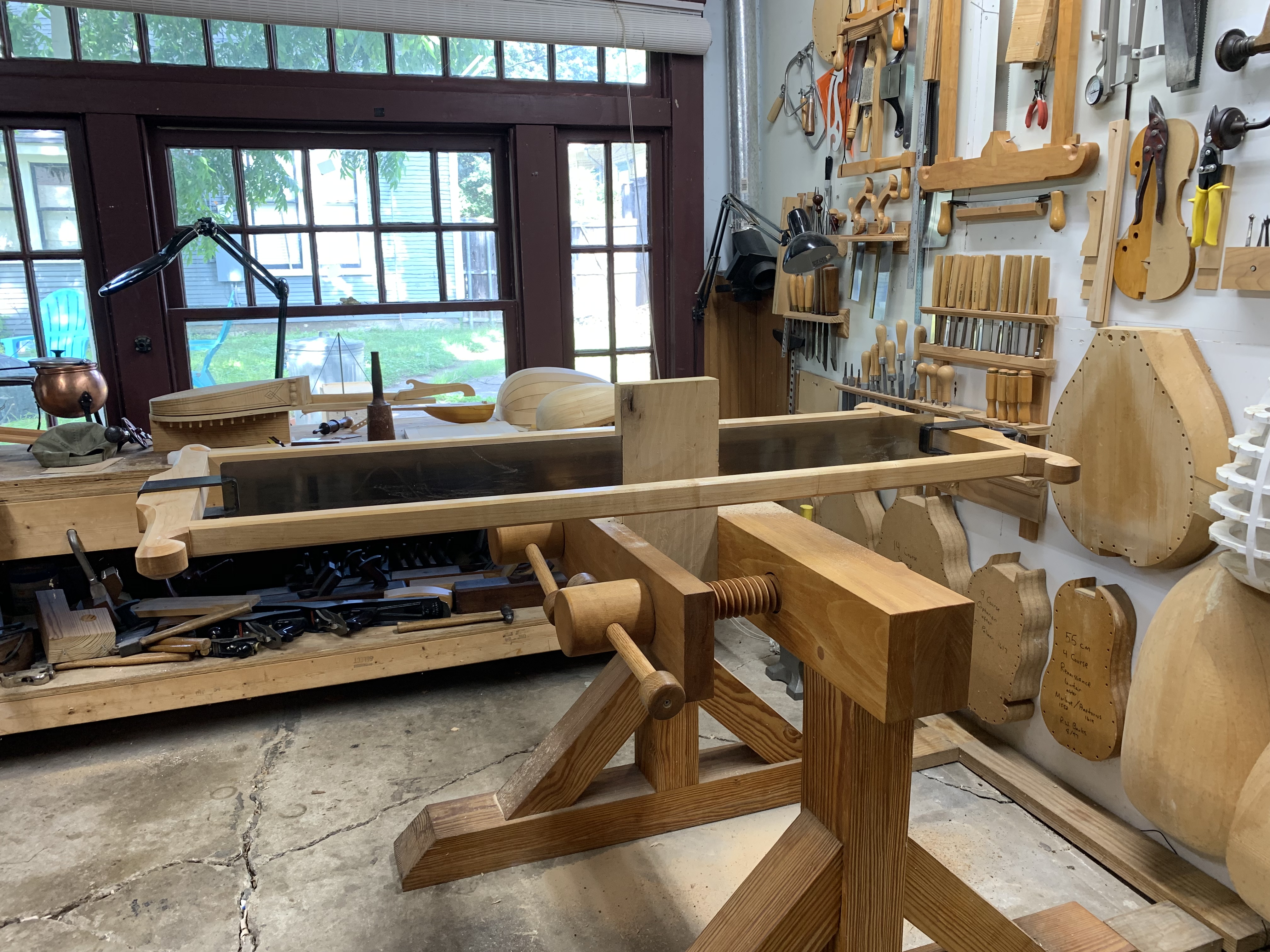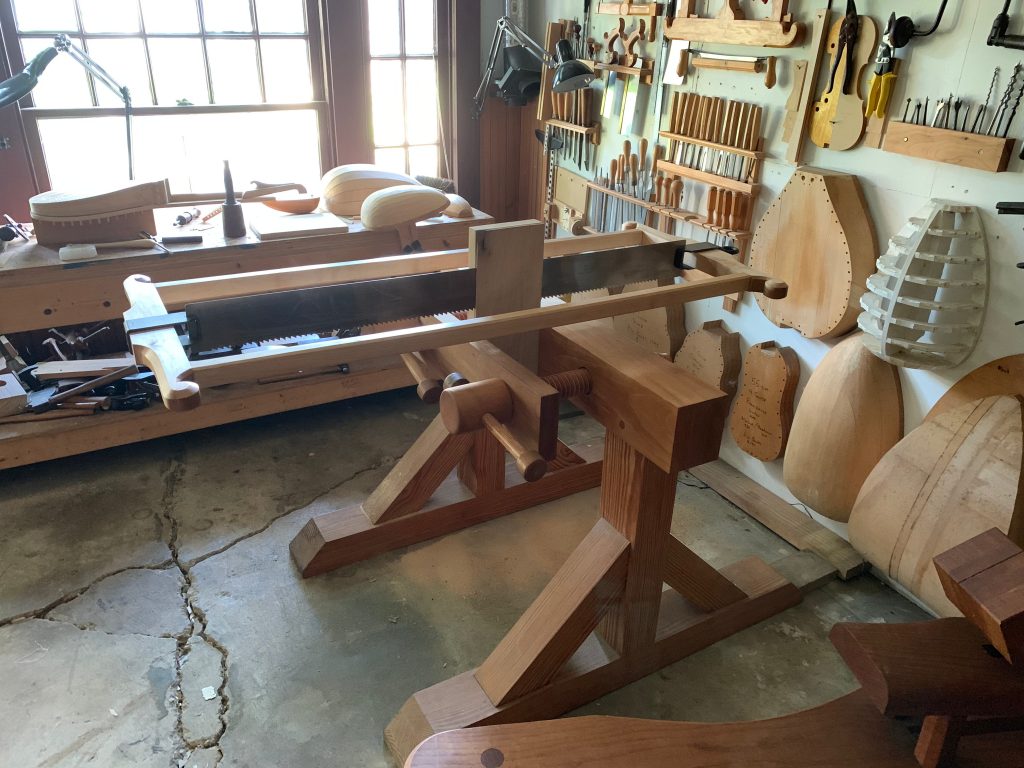
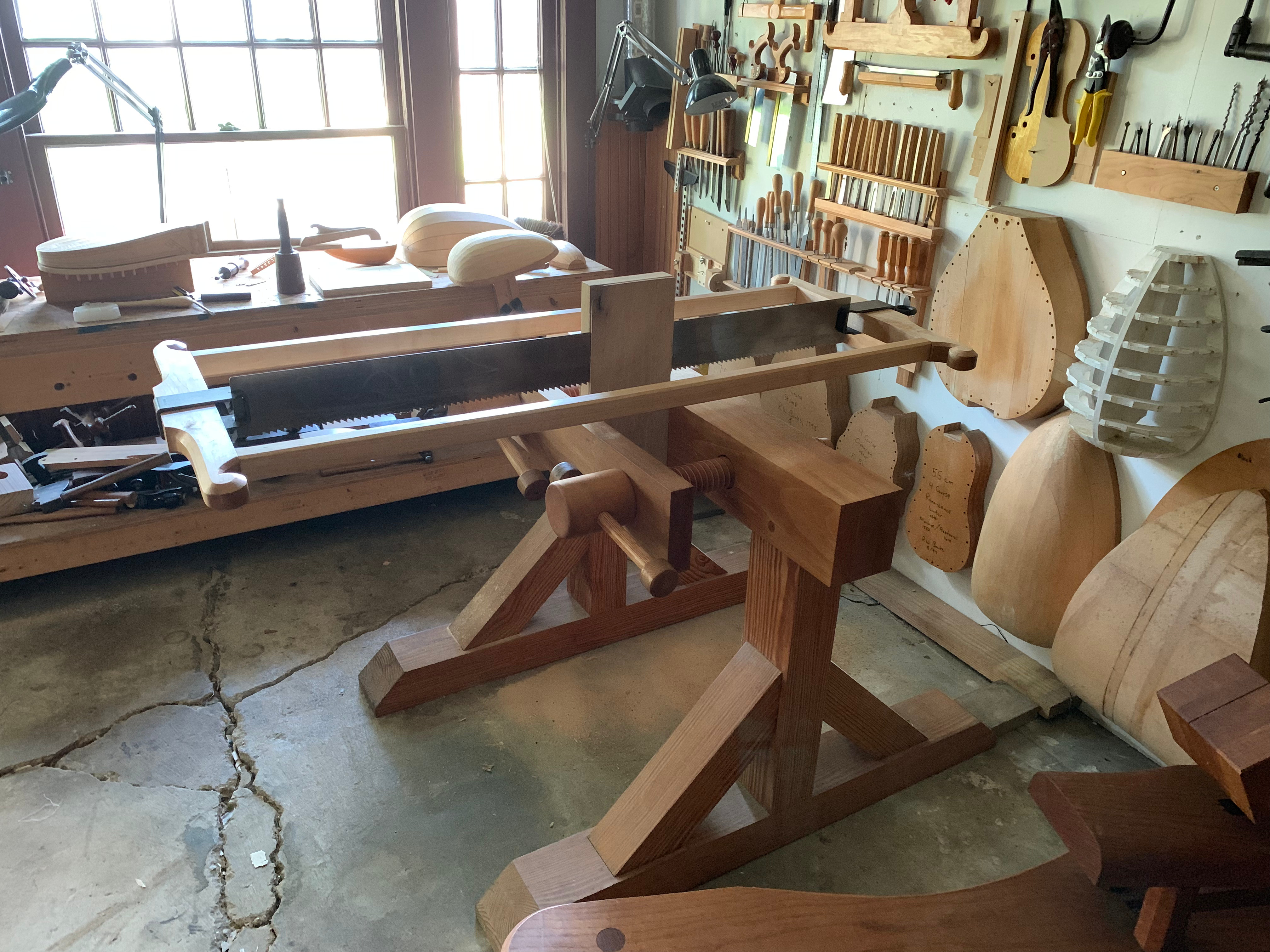
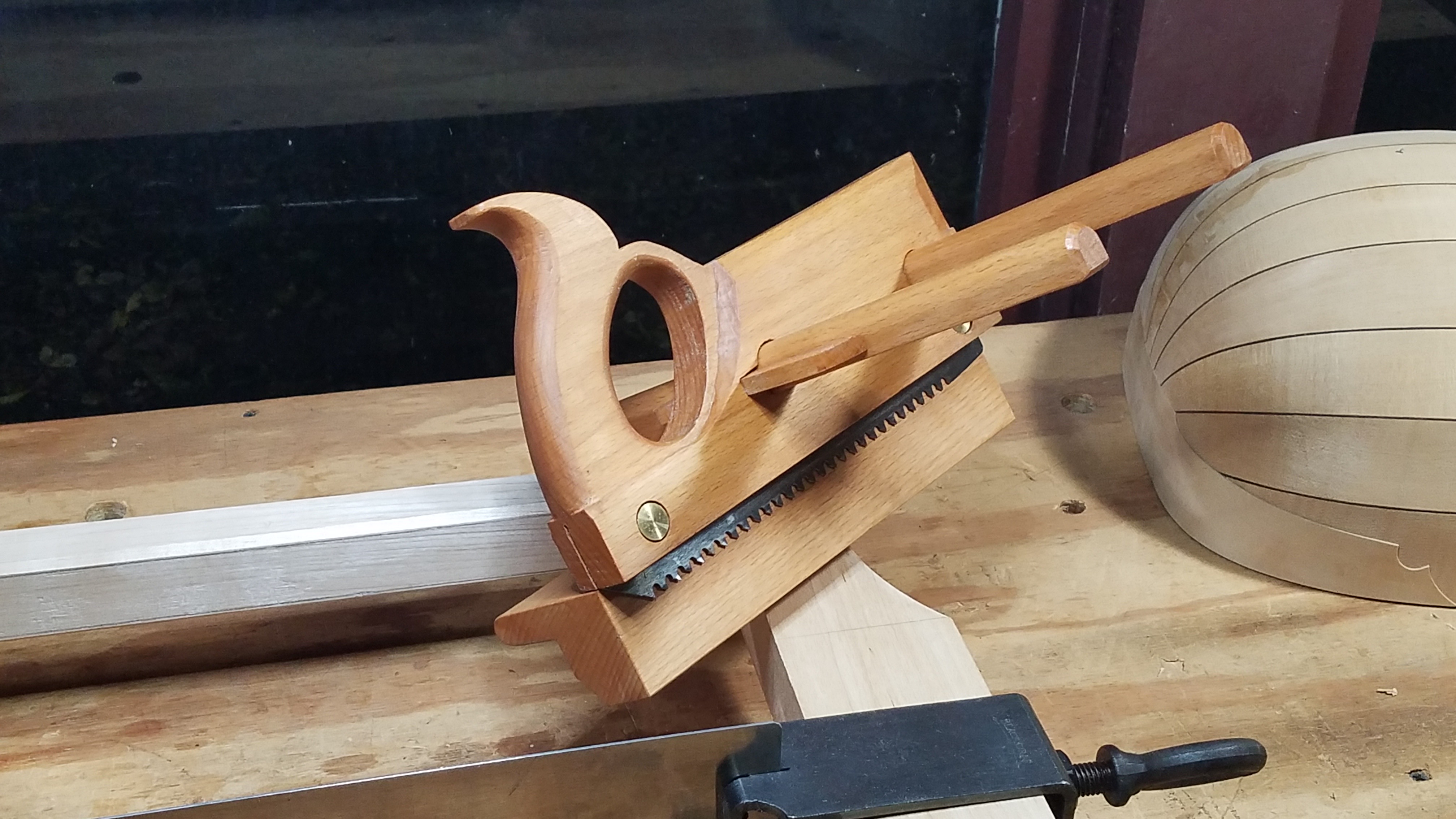
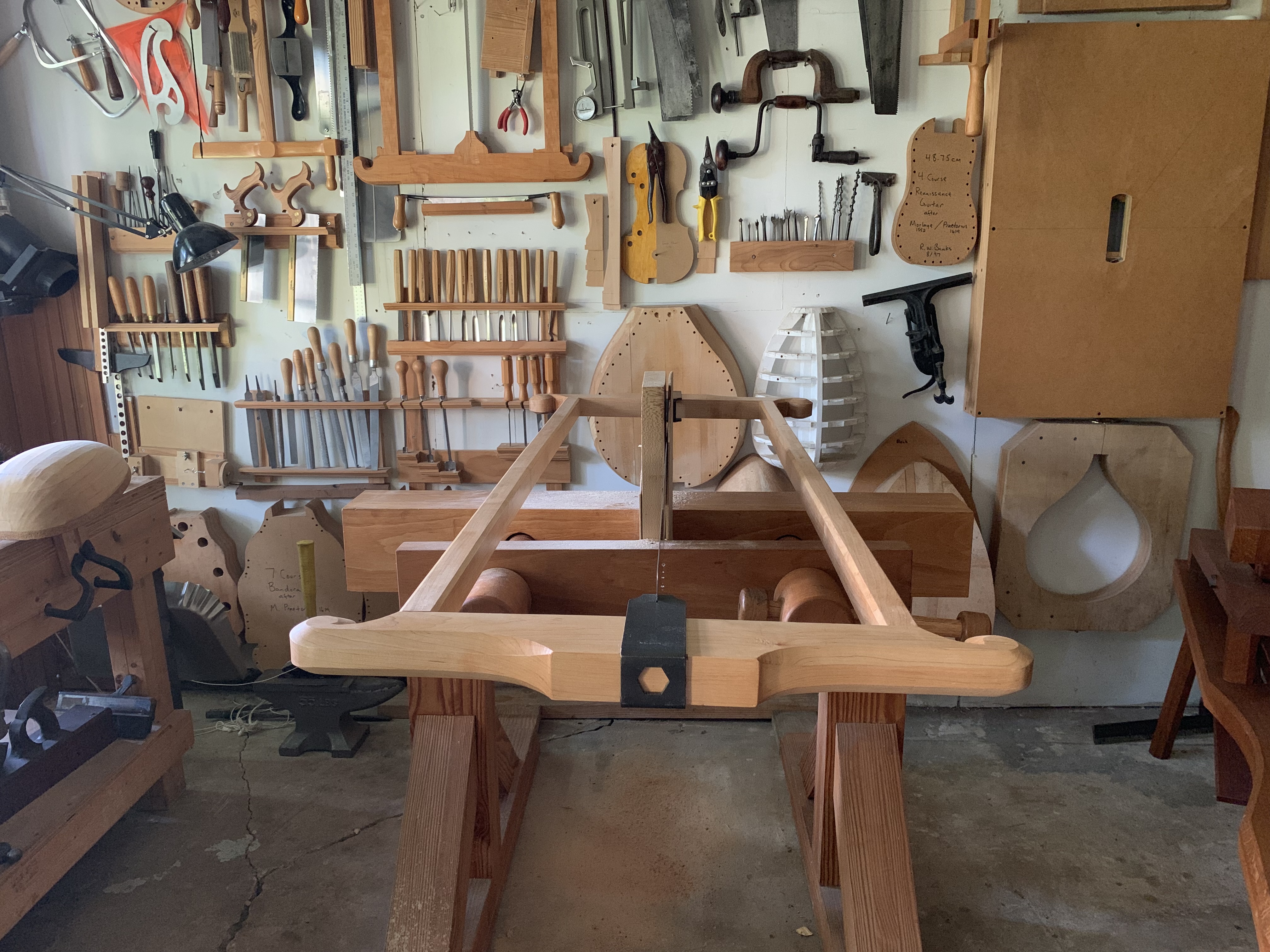
After the rebate/guide-kerf was cut, I placed the Sycamore stock in my Diderot (Ebéniste’s) vise, and began the cut. About halfway through, the cut ran out to the left side, which helped me remember one of the most important lessons I had forgotten about veneer sawing…gravity always wins, especially with big saws in wide stock. Setting the kerf direction as plumb (at least for me) is essential to get a decent result.
As seen in this photo, the top of the saw blade can also lean into the weakest side of the cut, which will steer the cut into the thickest side of the stock. Countering that effect takes a little practice in order to balance the saw…resisting the weak side of the cut with a little extra pressure on the opposite hand, while also not pulling the cut out of plumb. Practice cut #2 was successful.
After sawing halfway through and flipping the stock end-for-end, the total time required to prepare and finish the cut was about 15 minutes. My old Delta 14″ bandsaw won’t handle a cut that thick, and even if it could, I’m sure I couldn’t set up the bandsaw and run the cut in less time. Cleanup after using the Roubo saw is also much easier, as there is much less fine sawdust to deal with. Make no mistake, it does take more effort than pushing wood through a bandsaw, but it’s not as bad as you might think. You also have to try very hard to lose a finger with a frame saw.
I’d never used a 48″ long frame saw before that practice session. Aside from gravity having an effect on the cut’s direction (which even happens with small saws), it also became very clear that the saw’s length makes it very sensitive to uneven arm pressure on the push-stroke. Keeping your body movement in line with the cut, and using your legs to power the cut (rocking back and forth) are also very important.